
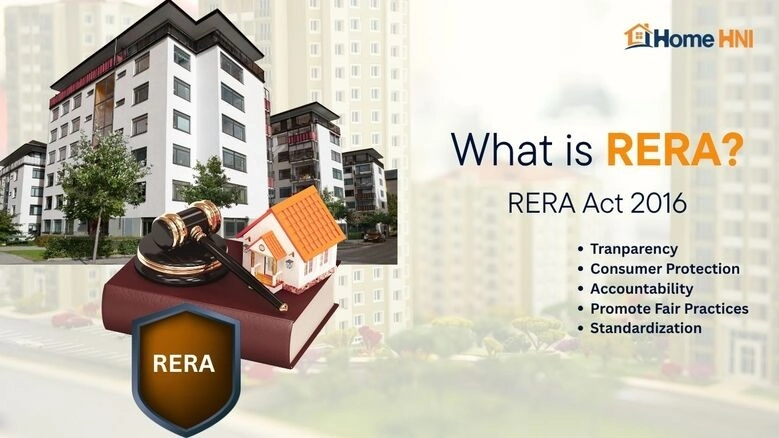
What Is RERA?
During the process of a property search, buyers often encounter a term RERA. But a question remains: what is RERA? And why it is crucial for homebuyers to know about it before investing their hard-earned money in a property. RERA is a 2016 law designed and implemented by the Indian parliament. It was made to protect the interest and rights of homebuyers.
RERA stands for Real Estate Regulatory Authority. It was introduced to maintain transparency, accountability, and regulation to India's real estate business. The law’s primary aim is to protect the interests of homebuyers and provide better mechanisms for resolving disputes. Here in this blog you will know the complete information regarding the RERA involving full form, key benefits, registration importance etc.
What Is the RERA Full Form?
RERA full form is the Real Estate Regulatory Authority. It is a regulatory body designed for the real estate sector to better track this business. RERA is commonly used as the abbreviated name for the Real Estate (Regulation and Development) Act, 2016.This regulatory framework was introduced in India to bring greater transparency and accountability in real estate transactions and address disputes.
Frame Work of RERA Act 2016
In Indian real estate, RERA generally represents the Real Estate (Regulation and Development) Act, 2016. It was formed to carefully administer the real estate sector and resolve all the concerns of homebuyers. These include refund issues, false advises, misleading information, hidden charges, project delays, lack of transparency etc.
The Act allows regulatory authorities in all the states and Union Territories to keep track of registered real estate projects and agents. These authorities monitor adherence with RERA rules and encourage transparency in property transactions .They also take action on complaints filed by the homebuyers against developers or agents. This regulatory framework helps maintain greater accountability and trust in the real estate sector of India.
Key Aims of the RERA Act
Some of the key goals of the RERA Act are:
Transparency: Developers have to register their eligible projects with the RERA authority while providing important details of the projects. This assists buyers make better financial decisions.
Consumer Protection: RERA gives complete protection to homebuyers it protects their interests and rights while promoting timely project completion.
Dispute Resolution: RERA builds a system to solve the conflicts among buyers and developers while keeping the process smoother, efficient and trustable.
Accountability: Developers must follow the promised project timelines. They also need to maintain a separate bank account for project funds. This helps ensure proper use of the money.
Promote Fair Practices: RERA encourages honest and transparent dealings. It also helps reduce unfair and fraudulent practices in the real estate sector.
Regulate Agents: Real estate agents must register under RERA and follow its rules. This promotes professional and responsible practices.
Standardization: RERA helps standardize practices and processes in the real estate sector. This can improve efficiency and create more consistency.
What Is the RERA Act?
The RERA Act sets rules and responsibilities that real estate developers, buyers, and agents need to follow. This Act says it is important to register projects meeting the applicable registration criteria before advertising, marketing, booking and sale. Under the act eligible real estate projects must be registered with the relevant state or union territory RERA authority.
The central RERA framework generally includes those projects that cover the land of more than 500 square meters or has more than eight apartments. Although state rules and specific exemptions should be checked since the conditions may differ according to the state.
What Is RERA Registration?
It is a registration process where eligible real estate developers need to register their projects with the relevant Real Estate Regulatory Authority of the respective state or Union Territory.
During the process developers need to submit certain information and documents related to the promoter, land, approvals, sanctioned plans, projects, and proposed development. Registered projects are also essential to offer prescribed updates and disclosures.
Real estate agents particularly dealing with covered projects may also register under the applicable RERA rules.
Information Required Under RERA
A builder need to rigorously follow the details and fill specific details during the process of registration of a property under RERA:-
-
Number of apartments
-
Detail of carpet area
-
Consent for major changes
-
Project updates
-
Project completion timeline
-
Truthful advertising that does not promise or misleading claims
-
Cancellation of units
Benefits of RERA for Homebuyers
The RERA Act has introduced several safeguards for property buyers.
Greater Transparency : Developers are required to provide specified project information through the regulatory system. This allows buyers to research a project before making a purchase.
Better Accountability : RERA places responsibilities on promoters regarding project disclosures, construction progress, and agreed timelines. This helps create greater accountability between developers and buyers.
Protection Against Unfair Practices : The Act seeks to reduce misleading practices by establishing regulatory oversight and requiring developers to provide prescribed information.
Carpet Area-Based Sales : RERA provides for the sale of apartments based on carpet area, helping buyers understand what usable space they are paying for.
Separate Project Account : Under the Act, 70% of amounts realized from allottees for a real estate project are required to be deposited in a separate bank account, subject to the provisions of the law. These funds are intended to cover the cost of land and construction for that project.
What Does RERA Approved Mean?
Many property advertisements use the term “RERA approved.” Technically, it is better to understand this as a RERA-registered project rather than assuming that RERA has approved each aspect of the property.
A registered project should have a registration number and relevant project information available through the applicable state's RERA authority. Buyers can use these details to check information about the promoter, project, approvals, timelines, and other disclosures.
Therefore, before purchasing a property, buyers should verify the project's RERA registration directly on the relevant official portal.
Conclusion
Through reading this blog you have got the whole idea why and how RERA Act was formed in the real estate sector of India. Now buyers and developers can make informed decisions while maintaining fair practices and support each other to build a house or apartment which is secure, safe and reliable.
From knowing RERA registration to project disclosures, regulatory oversight to dispute-resolution mechanisms, each information is significant in order to avoid disputes in further proceedings. Overall the framework is designed to support homebuyers before making a financial decision. Hence, for buyers it is indispensable to verify its registration details through the relevant RERA website to avoid property related issues.
Frequently Asked Questions About RERA